
Sonnenblick Development in the news
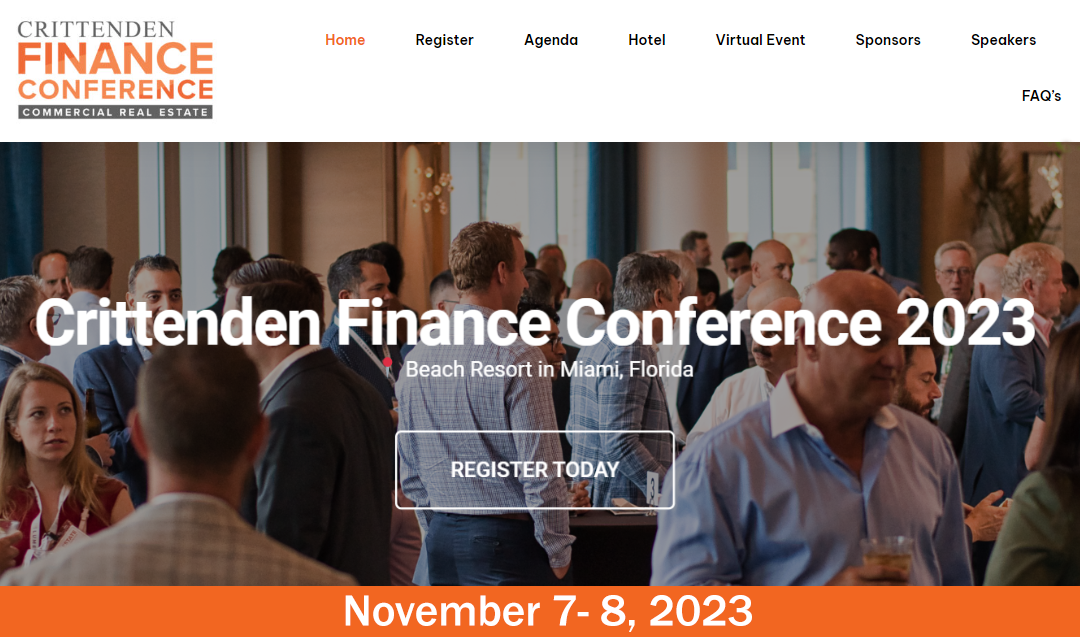
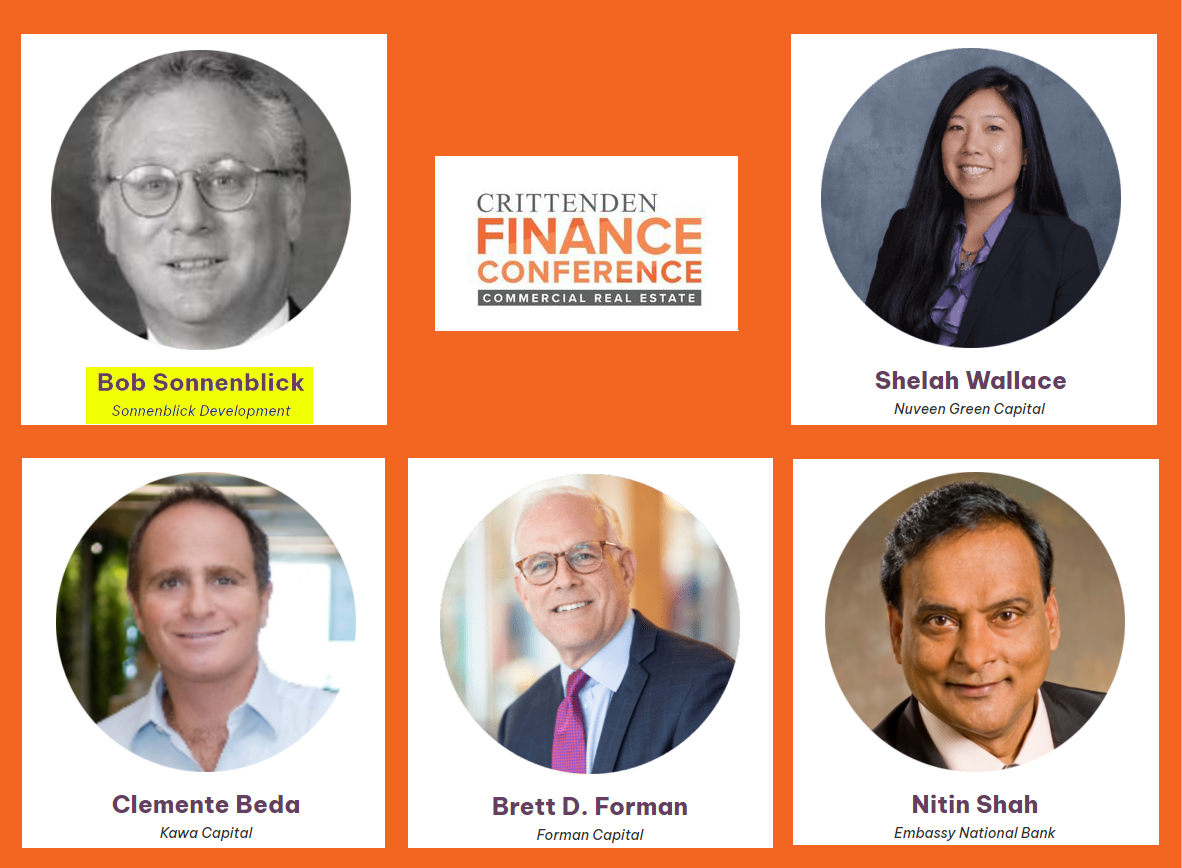
Press Release: Bob Sonnenblick to Moderate at Crittenden Finance Conference Nov 7- 8, 2023
Press Release: October 19, 2023
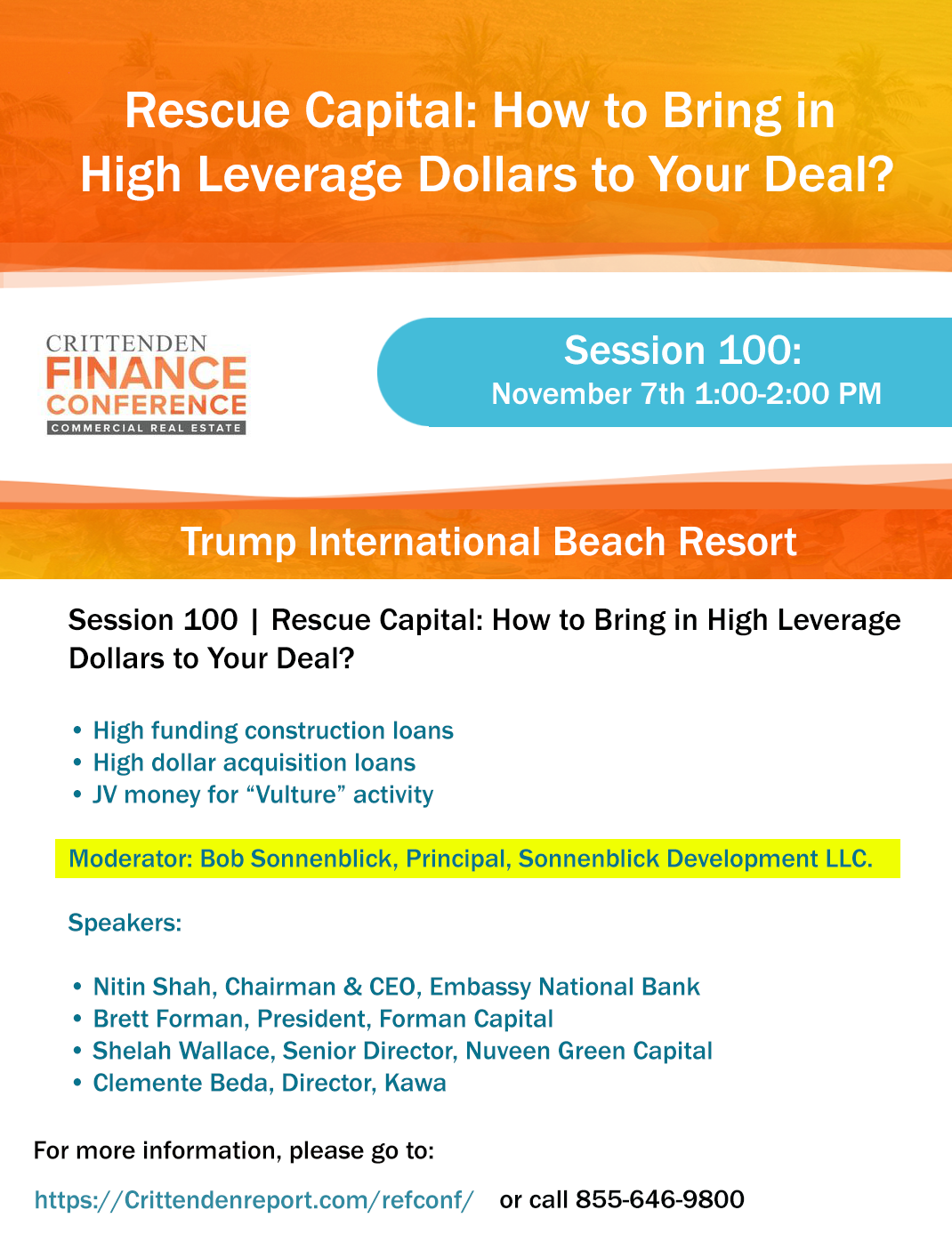
Crittenden Real Estate Conferences Inc. has chosen Los Angeles-based real estate developer <span class”yellow”>Robert Sonnenblick</span>to moderate the opening keynote panel at the upcoming Crittenden Real Estate Conference on November 7, 2023 in Miami, Florida at the Trump International Hotel in Sunny Isles.
The topic of the opening panel will be “How to find high leverage dollars for acquisitions in today’s real estate finance markets.” Panelists will be an array of the most active lenders and equity providers doing major real estate funding on commercial and residential projects.
Jimmy Buffett’s real estate legacy: luxury homes and Margaritaville hospitality
“Cheeseburger in Paradise” singer-songwriter built a brand by exalting the Key West lifestyle
see article: Sep 4, 2023, 12:00 PM By Ted Glanzer
https://therealdeal.com/miami/2023/09/04/jimmy-buffetts-real-estate-legacy-luxury-homes-and-margaritaville-hospitality/
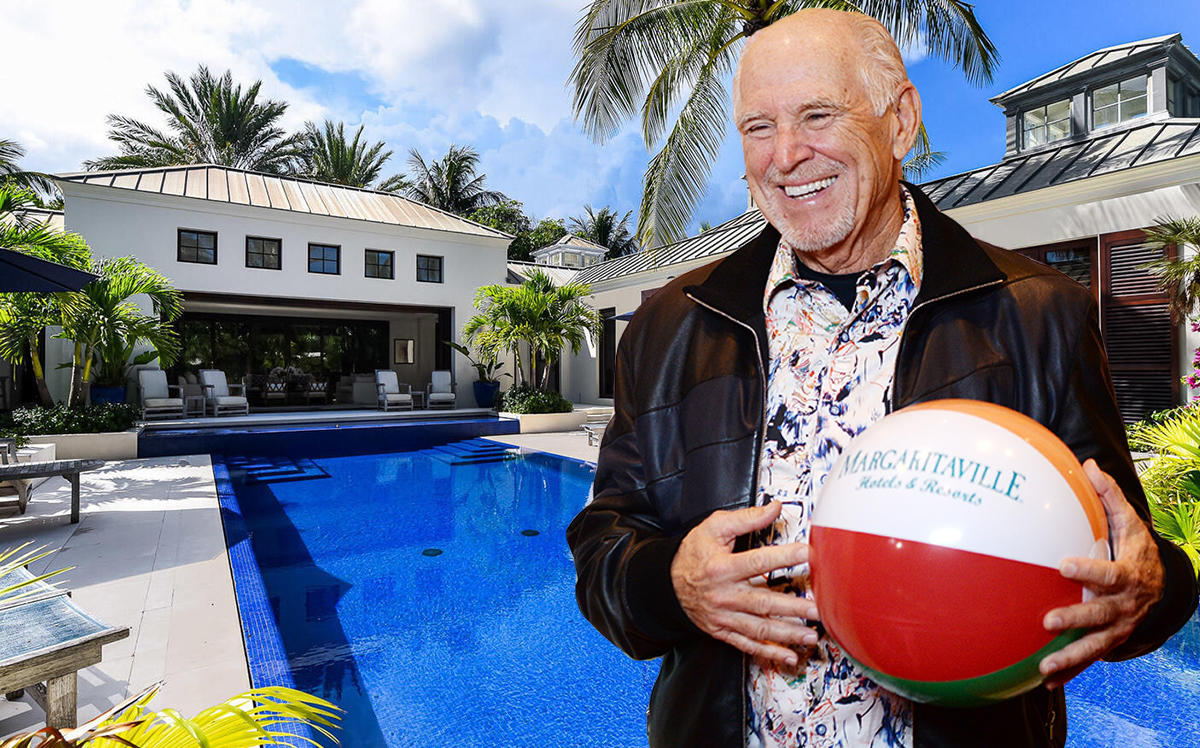
And while his ascendancy to wealth was atypical, his real estate holdings were a bit more conventional.
Buffett — who died Sept. 1 at 76 due to complications from a rare form of skin cancer — owned homes in Palm Beach, Florida, and another in Sag Harbor, New York. He also had an estate in St. Barts, according to Barrons.
Palm Beach, Florida
Buffett recorded some of the most iconic songs extolling the virtues of Key West, including “Margaritaville,” but Palm Beach was a part-time home for a long while.
The singer and business mogul, along with his wife, Janem sold their home at 309 Garden Road for $6.9 million to Warren B. and Allison Kanders, property records show.
The “Cheeseburger in Paradise” singer-songwriter put his house on the market in October for $7.6 million with Denise Hanley of Denise A. Hanley, Inc.
Buffett paid nearly $5 million for the three-bedroom, 4,783-square-foot home in 2011. The non-waterfront Palm Beach home, with a pool, was built in 2003.
It’s not the only home Buffett owned in Palm Beach. Buffett also lived at 540 South Ocean Boulevard, which, along with two other properties, was sold in 2014 by billionaire philanthropist Jon Stryker to companies tied to an English luxury home-building firm for $43 million.
Stryker purchased 540 South Ocean from Buffett and his wife Jane in 2010.
Sag Harbor, New York
Buffett owned a five-bedroom, six-bathroom, 5,300-square-foot home in Suffolk County, according to Trulia. It’s where he spent his final days, according to multiple sources.
Latitude Margaritaville Retirement Villages
These 55+ communities are inspired by Buffett’s music and lifestyle — namely food and escapism — in Florida. The cottages and homes start in the $300,000+ range, according to the website.
Margaritaville Hospitality
Buffett built much of his wealth on his business holdings, one of which was his Margaritaville hospitality company called Margaritaville Holdings LLC, which has locations in the U.S., Canada and Caribbean, including in South Florida. The hotel chain has dozens of locations nationwide.
In July it was announced that a Margaritaville-branded hotel could anchor a proposed waterfront mixed-use project in Riviera Beach’s Marina Village.
The project’s master developer, Atlanta-based APD Solutions, is partnering with singer-turned-hotelier Jimmy Buffett to add a five-story building with 150 rooms and an 875-space parking garage to anchor the proposed mixed-use site, which also entails 225,000 square feet of retail and restaurant space.
Vaughn Irons, APD’s CEO, unveiled his development team’s plan last month during a meeting of the Riviera Beach Community Redevelopment Agency, which owns the sprawling 90-acre redevelopment site known as Marina Village. The partnership also includes Sonnenblick Development, based in Pacific Palisades, California.
Sept 14, 2022: Bob Sonnenblick to Moderate Real Estate Investment Conference

State of the Industry for
Finance & Investment
Opening Keynote: September 14 – 2:30 PM EST
- Impact of interest rate escalation on the mortgage industry
- Today’s underwriting parameters
- Lender’s preferred product types
- Markets/cities that lenders like best
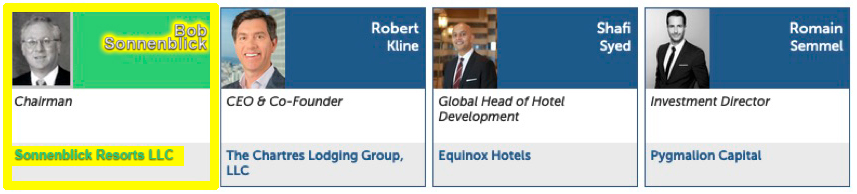
Moderator: Bob Sonnenblick, Chairman, Sonnenblick Development
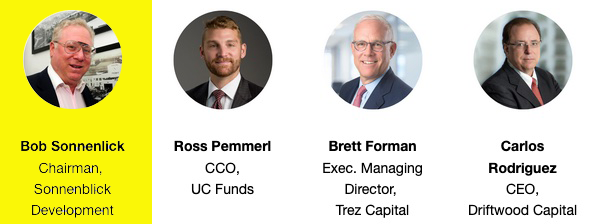
May 19, 2022: Bisnow: You Need More EV Charging Spaces Than You Think: Greener Additions Becoming Easier To Get Into Projects
Sonnenblick Development’s Bob Sonnenblick
May 10, 2022 BISNOW: Construction, Development and Design in Los Angeles
see on BISNOW

Southern California’s car culture is changing, and developers and architects are laying the framework in their projects for a near future where there are fewer cars but more need to be charged.
“You need more EV charging spaces than you think you do,” AvalonBay Communities Southern California Senior Vice President Mark Janda said at a Bisnow construction and design event last week.
Ten years ago, he said, it was a struggle to get AvalonBay’s investment committee to approve 10 new EV chargers on a project, but as electric vehicles began to hit the road and become a more common sight on city streets, that has changed. Now, Janda said, AvalonBay is considering putting an EV charger in as many as 25% of parking stalls.
At one transit-oriented development, parking is being considered as temporary, according to McCullough senior associate Benjamin Arcia.
“We designed everything under the parking podium as retail space that’s temporarily occupied by parking,” Arcia said. “We’re going to remove parking and insert retail modules under these residential buildings as the neighborhood becomes more and more ready for it.”
Sustainability in general was a theme throughout the conversation, with speakers touching on the rise in consumer interest in supporting sustainable companies and products.
“Every one of the deals that we do at PACE Loan Group, we require an energy audit,” PACE Loan Group Vice President Ed Wlodarczyk said. “I want to make sure and our partner, who’s actually giving us all the money to put out there, wants to make sure that we’re doing something that actually works.”

Project delays and challenges because of the coronavirus were also discussed.
AvalonBay has partnered with Abode Communities on a massive redevelopment of the West LA Civic Center that will involve 926 residential units, roughly half of them income-restricted affordable at a variety of levels.
That project once anticipated a 2023 groundbreaking, but that has been pushed to late 2024, Janda said. The delay, which Janda said “isn’t that unusual for projects of this scale,” was chalked up to the complex nature of the deal. The property has two owners, the city and county of Los Angeles, and the county bought the land from a state entity.
Janda pointed to AvalonBay’s Arts District project, which is under construction but took five years to get to groundbreaking.
“It’s not uncommon in LA, and it’s one of the reasons why there’s a housing shortage, because it’s so difficult to build,” Janda said.
BLVD Hospitality’s Margaux Rotter detailed how Covid-19 slowdowns took the citizenM Downtown LA hotel, a modular design, from being six months faster than conventional construction to taking just about as long as the project would have taken with traditional construction.
State-level approvals of the modular units shaved off time and avoided some of the red tape that might have come with seeking city approvals for the project, Rotter said.
Brownstein shareholder Diane De Felice moderated the panel.
Mon. June 20, 2022: Bob Sonnenblick to speak at InterFace Southern California Desert Commercial Retail Real Estate Conference
June 20 2022, from 10:00 am – 2:00 pm at University of Redlands Orton Center

The in-person event is hosted by Western Real Estate Business, Shopping Center Business, California Centers, and Western Multifamily & Affordable Housing Business magazines, along with the InterFace Conference Group.
The conference will attract attendees from throughout Southern California and surrounding areas, including owners, developers, property managers, economic development executives, buyers and lenders who are active in the retail, industrial and multifamily sectors.
Topics for discussion include:
- What is the economic outlook for the next 12 to 24 months?
- How has demand for industrial properties grown and what is the outlook for new development?
- What is the availability of industrial land? How are land prices affecting future development?
- Who is developing and who is buying industrial properties?
- How have changes in e-commerce and advances in logistics impacted industrial development and design?
- How has the retail sector fared through the pandemic? Where are the strengths and weaknesses as the retail sector recovers from the pandemic?
- What retailers are opening and closing in the market?
What is the market seeing in terms of experiential retail, pop-ups, and nontraditional tenants?
Tue May 10, 2022 BISNOW: Construction, Development and Design in Los Angeles
BISNOW IN-PERSON
Los Angeles

CONSTRUCTION, DEVELOPMENT
AND DESIGN IN LOS ANGELES
LOCATION
The Westin Bonaventure
404 S Figueroa St
Los Angeles, CA 90071
Ballroom: San Gabriel & Santa Anita, 1st Floor
SPEAKERS
KEEPING UP WITH DEMAND AMIDST CONSTRUCTION SETBACKS
Working Through Supply Chain Issues, Labor Shortages, and Construction Costs
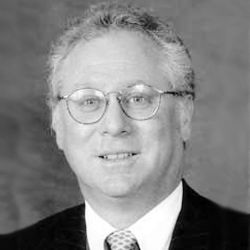
BOB SONNENBLICK
Chairman, Sonnenblick Development
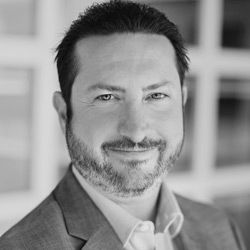
MIKE RACINE
Executive Vice President, Hackman Capital
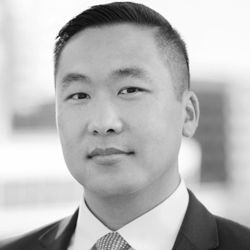
JONATHAN SHUM
SVP, Related California
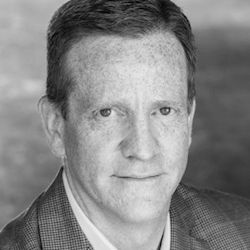
DANIEL STAFFORD
SVP, McCarthy Building Companies
For more information, please go to: www.Bisnow.com
Press Release: November 2, 2021. Los Angeles, Calif. Bob Sonnenblick to moderate IMN 3rd Annual Distressed Hotels Forum
IMN Conferences, Inc. has chosen Los Angeles-based real estate developer Bob Sonnenblick to moderate the keynote panel at their upcoming 3rd Annual Distressed Hotels Forum, to be located at The Waldorf Astoria Hotel in Las Vegas, Nevada on Tuesday November 16th.
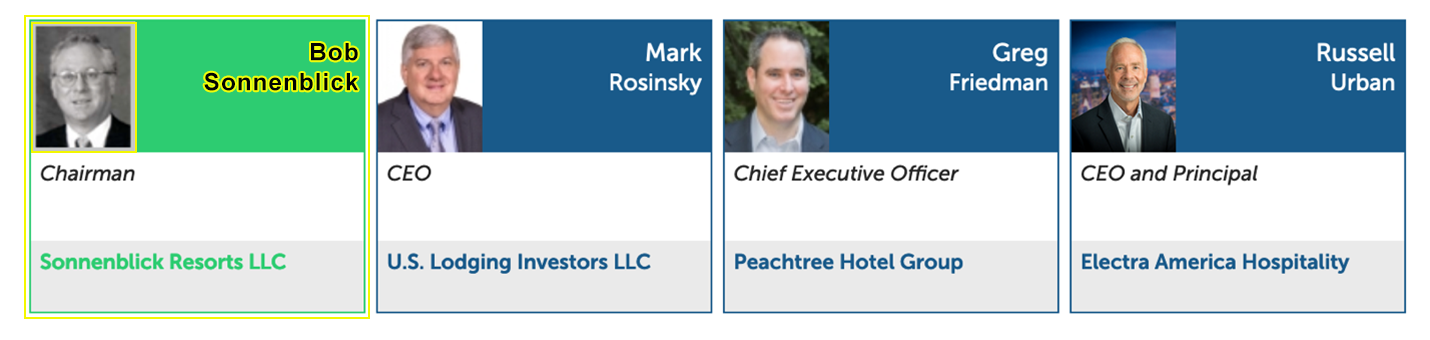
Mr. Sonnenblick is the Chairman of both Sonnenblick Development LLC and Sonnenblick Resorts LLC.. His panel will feature institutional hotel lenders and investors who are active in today’s post-Covid hotel investment marketplace. The panel title is: “Private Equity Outlook-Hotel Industry Fundraising and Capital Structuring”.
For more information on this conference, please go to www.IMN.org or to www.SonnDev.com
9-2-2021-Press Release: Bob Sonnenblick named as moderator: Crittenden Real Estate Finance Conference
Conference Details
September 22-24, 2021
Miami, FL
18 educational sessions – 65+ speakers – 5 networking events
Don’t forget to register! See you there!
PRESS RELEASE: Miami, Florida for Monday Sept 20,2021
Crittenden Real Estate Conferences Inc. has announced that Los Angeles-based real estate developer Bob Sonnenblick, Chairman of Sonnenblick Development LLC, has been named as Moderator for their keynote panel “The Post-Covid Real Estate Finance Marketplace” at their upcoming Crittenden Real Estate Finance Conference to be held at The Mandarin Oriental Hotel on Thursday Sept 23 in Miami, Florida at 9am. See www.crittendenrealestatefinance.com
Sonnenblick Development In the News – Fresno August 2021
UPDATED AUGUST 17, 2021 08:09 AM
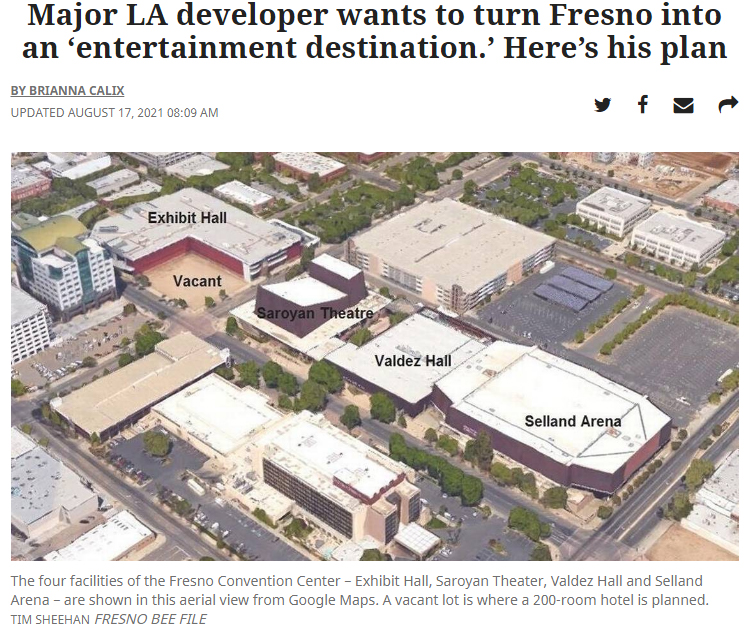
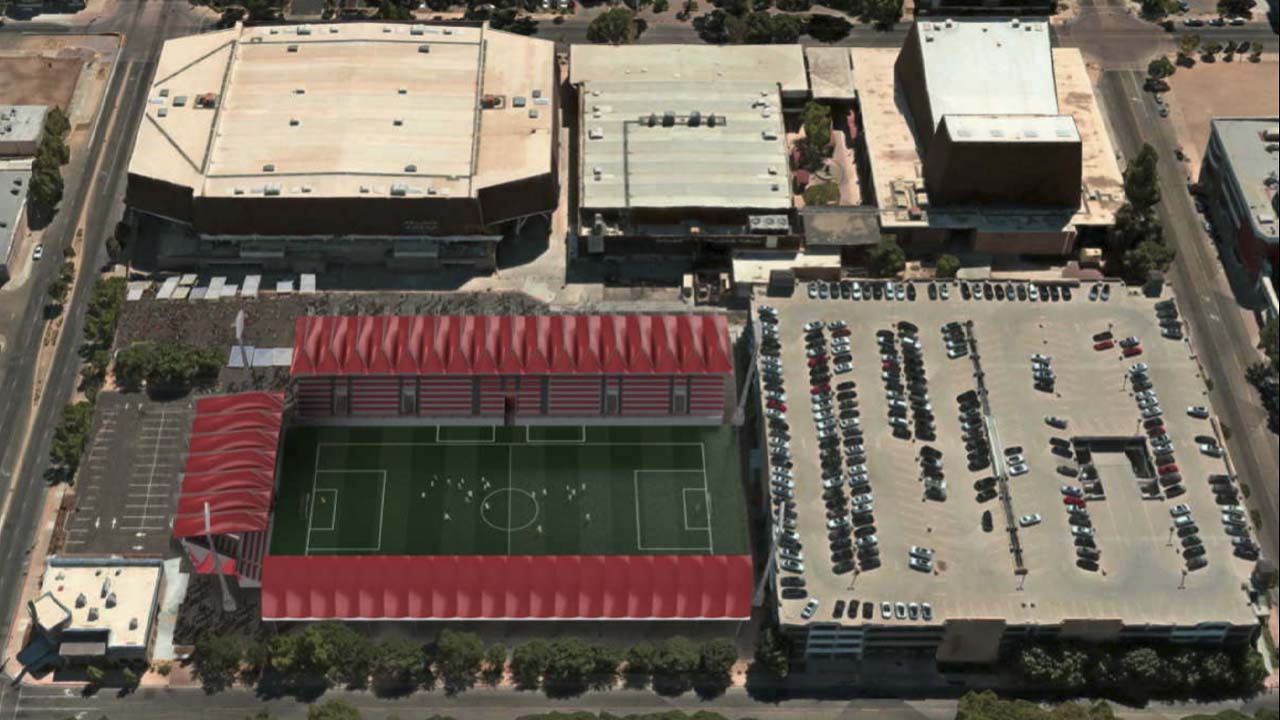
The four facilities of the Fresno Convention Center – Exhibit Hall, Saroyan Theater, Valdez Hall and Selland Arena – are shown in this aerial view from Google Maps. A vacant lot is where a 200-room hotel is planned. TIM SHEEHAN FRESNO BEE FILE
A noted Los Angeles developer has expressed interest in purchasing and improving multiple properties in southern areas of the city to turn Fresno into “a family-friendly entertainment destination.”
Sonnenblick Development will present to the Fresno City Council this week on its proposal to purchase and improve the Selland Arena, Valdez Hall and the Saroyan Theatre if and when it becomes available. The council also will negotiate the sale of Selland in closed session with Sonnenblick.
“We think they’re highly underutilized under the city’s ownership and they would be much more successful in private, entrepreneurial hands,” Robert Sonnenblick said in a phone interview with The Bee.
Sonnenblick said he’s also met with Fresno County officials and is interested in purchasing portions of the Fresno Fairgrounds and the former University Medical Center. He declined to outline his vision for those properties, citing potential competition.
“The opportunities in Fresno are fabulous,” he said. “Fresno’s got a very stable population with good, hard-working people, and it just doesn’t have the right entertainment venues made available to the public.”
Last month, Mayor Jerry Dyer and Councilmember Miguel Arias confirmed to The Bee they gave Sonnenblick representatives a tour of the city and made offers to purchase city property and develop other projects in downtown and along Highway 99 in south Fresno. Projects could include amusement park, indoor water park, revitalized arena, hotels and student housing, they said. Sonnenblick has previously publicly talked about his work with Six Flags, though no one has confirmed whether that’s the amusement park that could come to Fresno.
Arias told The Bee on Monday that Sonnenblick proposed $16 million in renovations to the Selland Arena and wants to bring the events promoter and venue operator Live Nation to the venue. Sonnenblick again declined to outline his plans for the venues, citing competition.
“It would be a game changer for downtown to be reinvested in and be a competitor to The Save Mart Center,” Arias said.
As for the former hospital campus, Arias said it’s “a dying asset that’s begging for reinvestment.” Any investment would also benefit the next-door Huntington Boulevard neighborhood, he said. The Bee reached out to county officials for comment and will update this story.
The county previously secured a development deal to turn the UMC campus into housing, but that deal deteriorated when a key county staffer was arrested and charged with conflict of interest related to the deal. The city later pulled out of the deal.
Central Valley Fuego FC also has aggressively pursued buying the Selland Arena and Valdez Hall to build a soccer stadium. Those talks led the city to declare the properties surplus, essentially opening a Pandora’s box of opportunities and prompting additional offers. That’s when Sonnenblick and USA Wrestling made offers, Dyer said.
Councilmember Nelson Esparza noted that Fuego FC already had the chance to present its offer to the city council, so Thursday’s agenda items give Sonnenblick the same chance.
If city officials do decide to sell any of its properties, the city must issue a request for proposals and consider the public offers.
The mayor still is interested in seeing a soccer stadium in downtown because he believes the demand is there, he said.
“However this eventually turns out, the goal is to maximize the number of people that come downtown for entertainment, whether that’s soccer, baseball, concerts or any other activity,” Dyer said.
Sonnenblick also expressed interested in Chukchansi Park, Dyer said, but any deal there would be much more complicated because of the city’s debt owed and the bonds involved.
“That’s another example of an asset that would do much better financially and serve the residents better if it were held in private hands,” Sonnenblick said.
Overall, Dyer said lots of developers — both locally and from out of town — are interested in Fresno.
Sonnenblick Development in The Fresno Bee: Major theme park coming to Fresno? Big investor eyes $300 million in possible projects
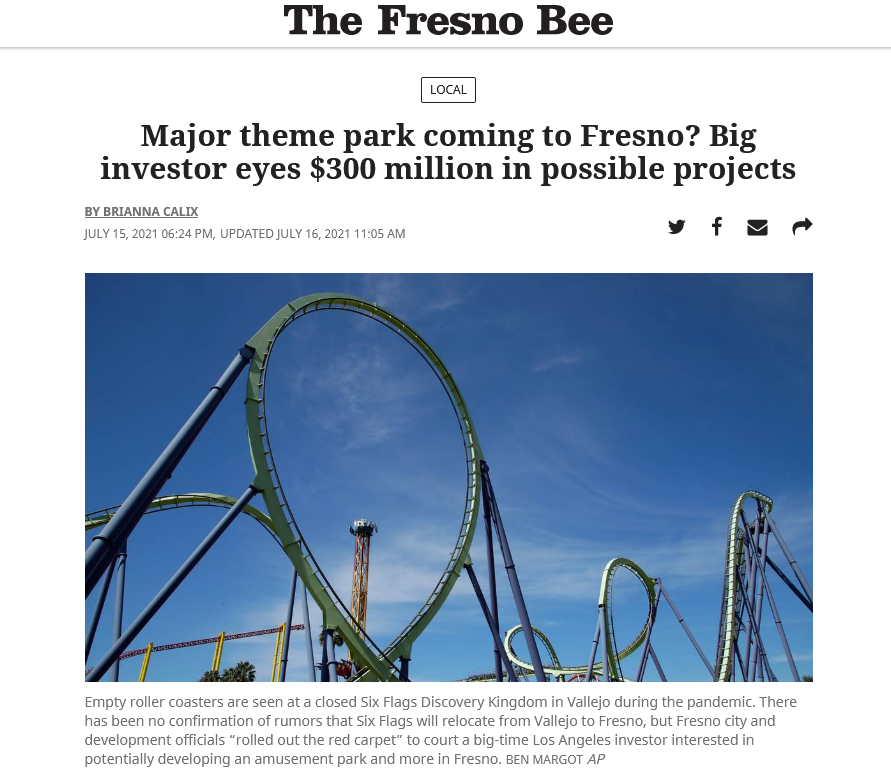
Fresno City Councilmember Miguel Arias confirmed to The Bee that representatives with Sonnenblick Development visited the city earlier this year and made offers to purchase city property and develop other projects in downtown and along Highway 99 in south Fresno.
LeeAnn Eager, president and CEO of the Fresno Economic Development Corporation, also confirmed Sonnenblick’s interest in Fresno.
Arias and Eager said the potential development investment could amount to $300 million and would be one of the single largest investments to diversify Fresno and the Central Valley’s economy in recent history.
“This represents not only an investment of about $300 million but the creation of an industry that has upward mobility, not minimum wage jobs,” Arias said. “It builds on diversifying our economy, where kids in high school can work there and become managers of hotels in the entertainment business. That’s why it’s so huge.”
Several factors make Fresno more appealing to investors, including the future High-Speed Rail station downtown, a dependable workforce, and the city’s sustainable water supply.
“The stars are aligning,” Eager said.
Just the first phase of potential projects would create upwards of 6,000 jobs, she said.
While rumors have swirled that Six Flags may relocate from Vallejo to Fresno, neither Arias nor Eager would confirm the amusement park was involved. The Bee reached out to Six Flags, and this story will be updated if there is a response. Sonnenblick declined to comment.
Bob Sonnenblick has an investment profile of $1.5 billion on the West Coast, and his company has led development on Los Angeles government buildings and luxury resorts alike. Sonnenblick has spoken publicly in the past about his work with Six Flags.
Sonnenblick already made an offer to buy the Selland Arena, creating stiff competition for the Fuego Football Club, which also hopes to buy the arena.
“Taxpayers should know that there’s a lot of good competition from people who want to invest in our city,” Arias said.
Sonnenblick Development in The Fresno Bee: Dyer: Dyer: Multi-million dollar theme park could bring ‘millions’ to Fresno each year
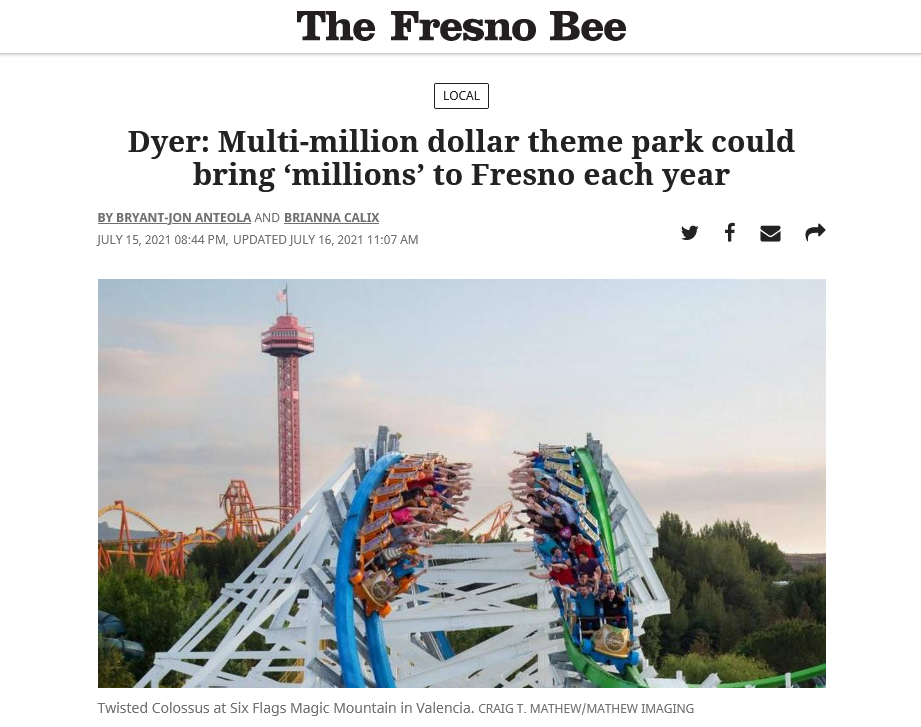
In a message to The Bee discussing the possibility of Fresno partnering to bring aboard a multi-million dollar amusement park, Dyer said the attraction could be built somewhere near Highway 99 or even in downtown Fresno.
Dyer confirmed that he and City Manager Thomas Esqueda have held numerous meetings with Robert Sonnenblick, the principal owner of the Los Angeles-based real estate development firm Sonnenblick Development, and his associates over the past few months.
“We have discussed several entertainment development opportunities near the 99 freeway as well as downtown Fresno,” Dyer said. “Not only have we rolled out the red carpet for Mr. Sonnenblick and those he represents, we have clearly demonstrated that Fresno is poised to serve as the entertainment hub for central California.”
An amusement park, indoor water park, and hotels could all be part of the potential project to make Fresno a central California attraction.
Fresno City Councilmember Miguel Arias and LeeAnn Eager, president and CEO of the Fresno Economic Development Corporation, told The Bee that the potential development investment could amount to $300 million.
Dyer expressed optimism that a multi-million dollar amusement park in Fresno could happen and would be well received by the local community and beyond.
“Although I am prevented legally from discussing the details of the entertainment venue,” Dyer said, “it is safe to say it would attract millions of people annually to Fresno.”
Sonnenblick Development in the News: Is ‘Six Flags Over Fresno’ the Real Deal? Developer Looking for Site

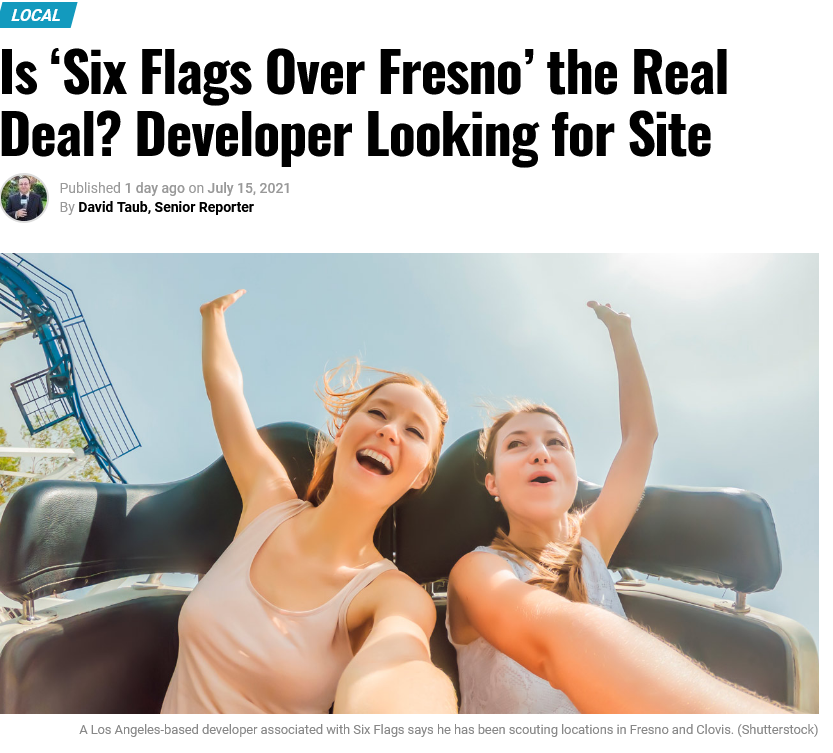
A developer associated with the Six Flags theme park company says he has been scouting Central Valley locations.
Developer Robert Sonnenblick says Six Flags is “looking at sites” in Fresno and Clovis. There have been several meetings with officials from both cities over the past three months.
“Fresno County is strong enough to support an amusement park complex,” Sonnenblick tells GV Wire.
Sonnenblick’s Los Angeles-based development company is known for building luxury hotels, shopping malls, and office complexes across the country. His company recently expressed interest in purchasing Selland Arena from the city of Fresno.
Related Story: L.A. Developer, Others Compete to Take Fresno Arena Off City’s Hands
Project Estimate of $300 Million
At a hotel building conference in March, Sonnenblick said his company is developing hotels at Six Flags properties in Los Angeles (Six Flags Magic Mountain is in Valencia), New York/New Jersey and Texas.
Speculation about a possible Fresno Six Flags project has been circulating for months. It was further amplified this week by a posting on a construction bidding website, seeking contractors for a project identified as a Six Flags Over Fresno Amusement Park. Dodge Data & Analytics values the listed project between $25-50 million for pre-design work.
Sonnenblick says the value of the entire project would be much higher.
He says between a hotel, retail space, amusement park and water park, the total investment would be $300 million.
“That would be one of our biggest,” said Lee Ann Eager, president and CEO of the Fresno County Economic Development Corporation.
Sonnenblick would not comment on whether a Fresno-area development would be brand new, or if Six Flags might relocate one of its existing parks. He would not reveal what sites in Fresno/Clovis are being looked at.
Last year, his company submitted a plan to build a Six Flags water park/hotel combination in Solano County, adjacent to Six Flags Discovery Kingdom in Vallejo. Sonnenblick says that deal is now dead.
“Vallejo and Solano County screwed up that wonderful piece of land. It will sit empty for decades,” Sonnenblick said.
Dyer: Rolling Out “Red Carpet”
Mayor Jerry Dyer is optimistic about Six Flag’s prospects in Fresno.
“The City Manager and I have had numerous meetings with Mr. Sonneblick over the past few months and taken several of his associates on a tour of our city,” Dyer said in a statement to the media after initially being coy when asked by GV Wire.
Dyer speculated possible locations.
“We have discussed several entertainment development opportunities near the 99 freeway as well as downtown Fresno. Not only have we rolled out the red carpet for Mr. Sonneblick and those he represents, we have clearly demonstrated that Fresno is poised to serve as the entertainment hub for central California. Although I am prevented legally from discussing the details of the entertainment venue, it is safe to say it would attract millions of people annually to Fresno,” Dyer said.
Meeting with City Officials
Eager confirmed her agency is working with Sonnenblick. However, she would not confirm their meetings with city officials were related to a Six Flags project.
Officials from Clovis would not confirm meeting with Sonnenblick.
“Any preliminary meetings taking place between the city and potential business ventures are confidential and we can’t comment on them,” said Clovis spokesman Chad McCollum.
Sonnenblick Development in The Fresno Bee: Will an amusement park really come to Fresno? Here’s what to know
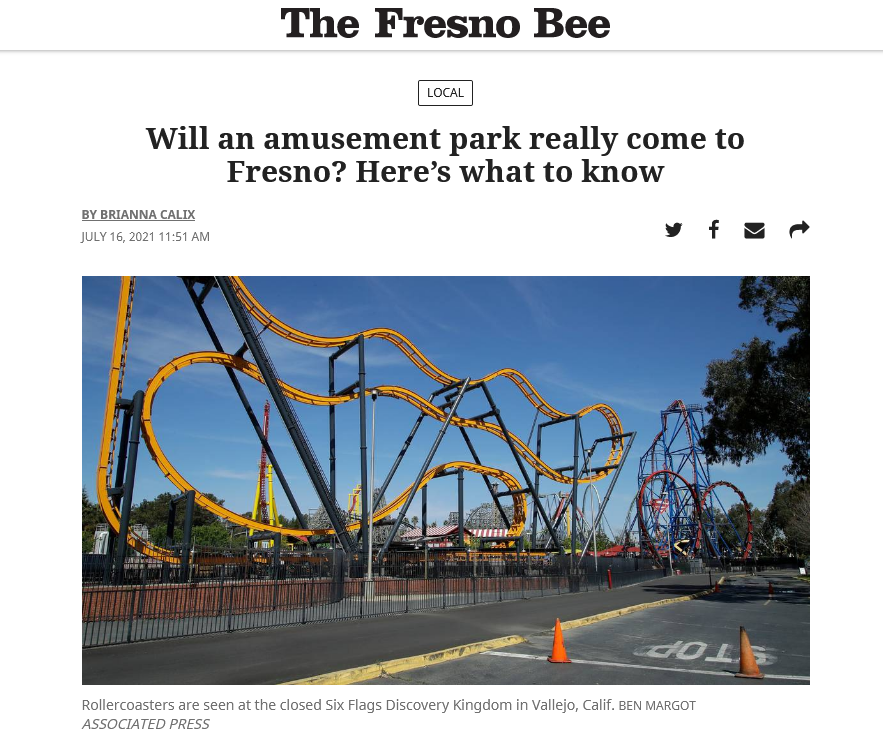
While nothing is set in stone, the potential of $300 million worth of projects would undoubtedly transform Fresno. Here’s what we know so far.
Is Six Flags coming to Fresno?
We don’t really know.
Mayor Jerry Dyer said he’s legally prevented from discussing details of the entertainment venue, meaning he likely signed a nondisclosure agreement. The Bee reached out to Six Flags for comment but never got a response.
But what we do know is this: Investor Bob Sonnenblick visited Fresno earlier this year and has met multiple times with Dyer, Councilmember Miguel Arias, and LeeAnn Eager, the CEO of the Fresno Economic Development Corporation.
Sonnenblick has spoken publicly about working with Six Flags on other projects. He builds resorts and hotels. Plus, Sonnenblick made an offer to the city to buy Selland Arena.
Arias told The Bee potential projects could include an amusement park, indoor water park, and revitalized arena.
Eager said Sonnenblick and his representatives are excited about Fresno.
“They said ‘Fresno on the precipice of being great,’” Eager said. “Of course, we always thought we were, but they said we would really love to get involved and help with development.”
Bob Sonnenblick – Crittendon 2021 Conference Speaker
Session 101: Opening Keynote
The Post-COVID Real Estate Finance MarketplaceModerator: Bob Sonnenblick
Chairman, Sonnenblick Development LLC
Real Estate Conference l Speakers
We would like to introduce you to some of our 2021 conference speakers!

Conference Speakers
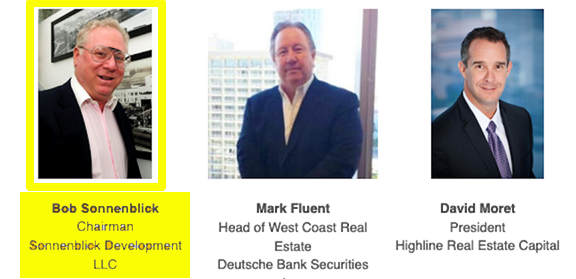
Bob Sonnenblick – Chairman, Sonnenblick Development LLC
Mark Fluent – Head of West Coast Real Estate, Deutsche Bank Securities Inc.
David Eyzenberg – President, Eyzenberg & Company
David Moret – President, Highline Real Estate Capital
Donald Moses – Managing Director, Real Estate Private Credit, Arena Investors LP
Vic Clark – Senior Managing Director & Head of Conventional multifamily production, Lument
Randy Wynne – Director of Revenue Management, RE Carroll Management
Jason Miller – Chief Investment Officer, Grand Sakwa Properties
Gary Bechtel – Chief Executive Officer, Red Oak Financial
Arthur Nevid – Head of U.S. Loan Origination, Romspen Capital
Alison Coen – Managing Director, Barclays
Solomon Garber – Senior Vice President, Northeast Bank
Greg Schecher – Director, Archway Capital
**Note: These are only conference moderators. Please visit our website for other speakers

Don’t miss out on these amazing speakers that are guaranteed to give you advanced industry information to help your business prosper and give you the necessary tools to build your company and succeed in today’s ever changing market.
Conference Highlights
September 22-24, 2021 • Miami, Florida
2.5 days • 18 educational sessions • 65+ speakers • 5 networking events
We hope to see you there!
Testimonials
– Robert Kline, Cushman Wakefield
“You will learn more about the motivation, focus and risk tolerance of high level decision makers, lenders and investors in 36 hours than any other conference you can attend.”
– David Repka, Bison Financial Group
PRESS: L.A. Developer, Others Compete to Take Fresno Arena Off City’s Hands
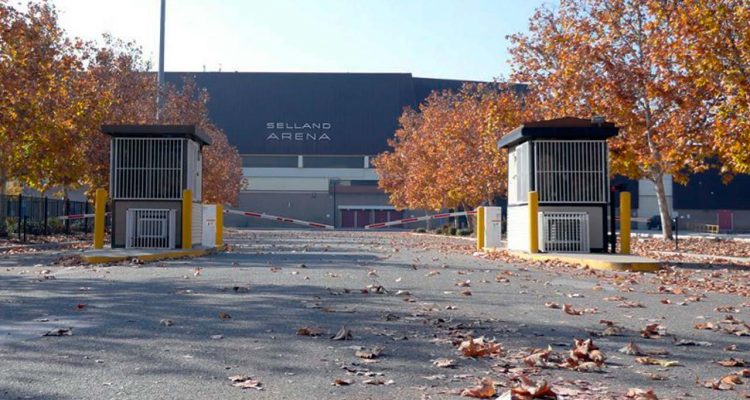
The future of Selland Arena could come down to three bidders.
Depending on what direction the Fresno City Council takes, the future of professional soccer hangs in the balance.
At its Thursday meeting, councilmembers will discuss the sale of the arena and surrounding land. The three listed companies on the agenda are Prosperous Terra, LLC (Ruelas, Inc.), owners of the Fresno Fuego professional soccer club; Sonnenblick Development, a Pacific Palisades firm; and USA Wrestling, the governing body for amateur wrestling.
The national office of USA Wrestling, based in Colorado Springs, Colorado, said they are not making the offer, but it is likely a related organization called California USA Wrestling, who made the bid.
California USA Wrestling did not respond to messages left by GV Wire.
A price for the arena has not been publicly revealed.
Developer Eyeing Fresno Market
Bob Sonnenblick, the principal of Sonnenblick Development, focuses on retail shopping centers, resort hotels, and government buildings. They have recently entered the arena business.
“Our plans are to own (Selland Arena) long term. We think it’s a great asset. That’s not the only asset we’re talking to the city about. We think that assets like that should not be under city ownership. Cities really don’t have the entrepreneurial background or experience in operating assets like that. They are better off being held in the private sector,” Sonnenblick said.
The city is looking at not only selling the arena, but the adjacent Valdez Hall and the parking lots that go with it. Sonnenblick said the area could use more parking and floated the idea of building another garage on the property.
Sonnenblick would not share what other city assets he is eyeing. But, he says prices in Los Angeles have him looking elsewhere.
“Prices in Los Angeles have gotten so stupid and so high that we decided to go to some secondary markets and we’ve identified Fresno as a tremendous growth area,” Sonnenblick said.
“Prices in Los Angeles have gotten so stupid and so high that we decided to go to some secondary markets and we’ve identified Fresno as a tremendous growth area.”
— Developer Bob Sonnenblick
Fuego: All or Nothing on Selland Arena
Fresno Fuego FC president Chris Wilson said it is Selland Arena or bust when it comes to the future of professional soccer in Fresno.
“The only way the business works for us is if we have all three facilities (Selland Arena, Valdez Hall and the parking lot) working hand in hand. If we don’t own the property or we don’t operate the property as a whole, the rental situation of land just doesn’t doesn’t pencil out,” Wilson said.
A few weeks ago, Fuego ownership made a public presentation during a city council meeting about their plans for Selland Arena. They plan to build a soccer-specific stadium in the parking lot, and use Selland and Valdez as youth sports and entertainment venues.
The Fuego would play in the USL, a pro soccer minor league. The team has been pitching the city on the Selland Arena project for seven months.
“We’re ready for the city to make a decision,” Wilson said.
The Fuego offer is the best, Wilson said.
“Our offer is more than just a purchase price. I mean, our offer is a commitment to the city to renovate and revitalize the Selland Arena property and to really build an entertainment hub for our community anchored by a brand new USL soccer stadium,” Wilson said.
Sonnenblick said he is willing to talk with the Fuego if he is the winning bidder. That doesn’t work for Wilson.
“We’ve seen what renting property looks like with Fresno. And it turns out not to work out,” Wilson said.
If Selland Arena falls through, the Fuego have a Plan B.
“We already have three other communities outside the city of Fresno that deeply, deeply want this project,” Wilson said.
One option could be using 45 acres owned by the team near Valley Children’s Hospital in Madera County.
Bob Sonnenblick to Speak at Hotels Opportunities Conference March 31, 2021
PRESS RELEASE: Monday March 29, 2021
UPDATED – SEE HIGHLIGHT VIDEO BELOW!
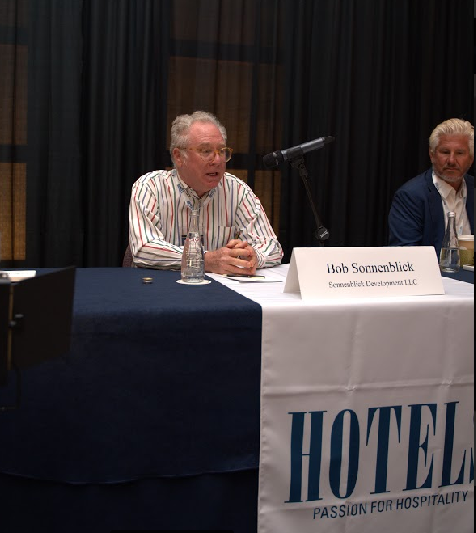
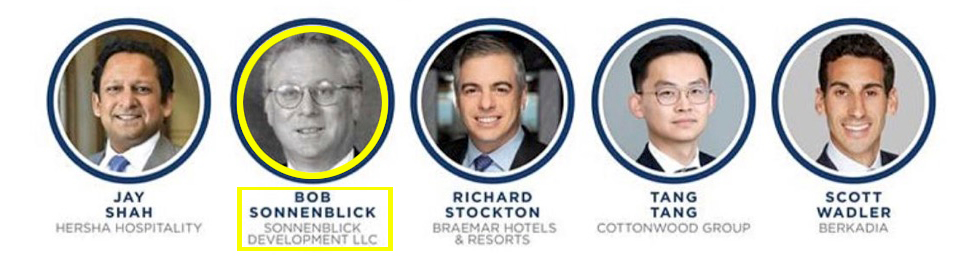
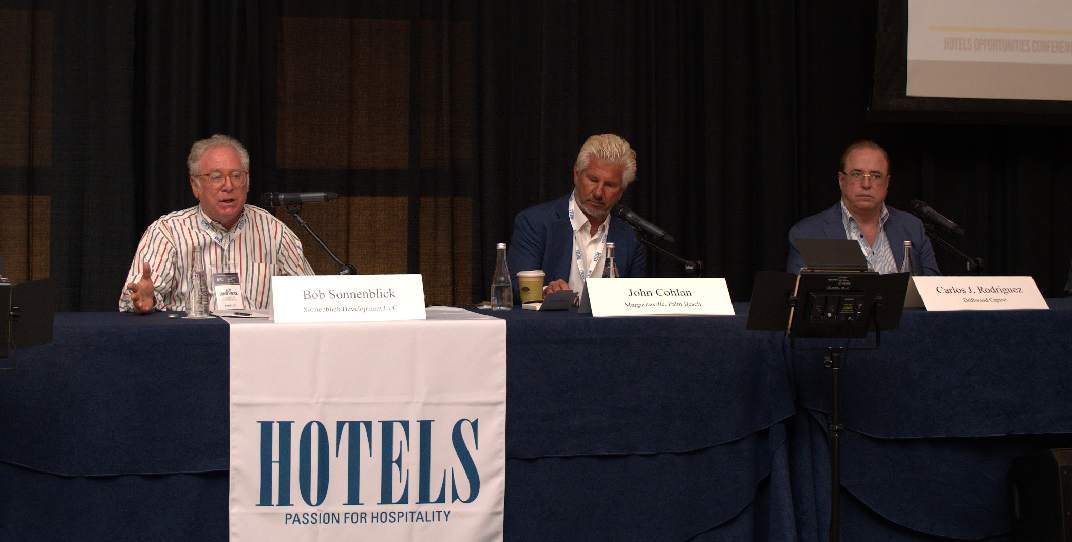
Hotels Magazine has announced that L.A.-based real estate developer Bob Sonnenblick has been added as a speaker on their keynote panel at the upcoming Hotel Opportunities Conference this Wednesday, March 31, 2021 at the Mandarin Oriental Hotel in Miami, Florida.
The panel topic is: Financing New Hotel Opportunities- Debt & Equity. It is the first major “live & in-person” hotel industry conference in over one year. For more info, go to www.HotelsMagazine.com
PRESS RELEASE: Los Angeles, Calif. Wednesday February 13, 2021
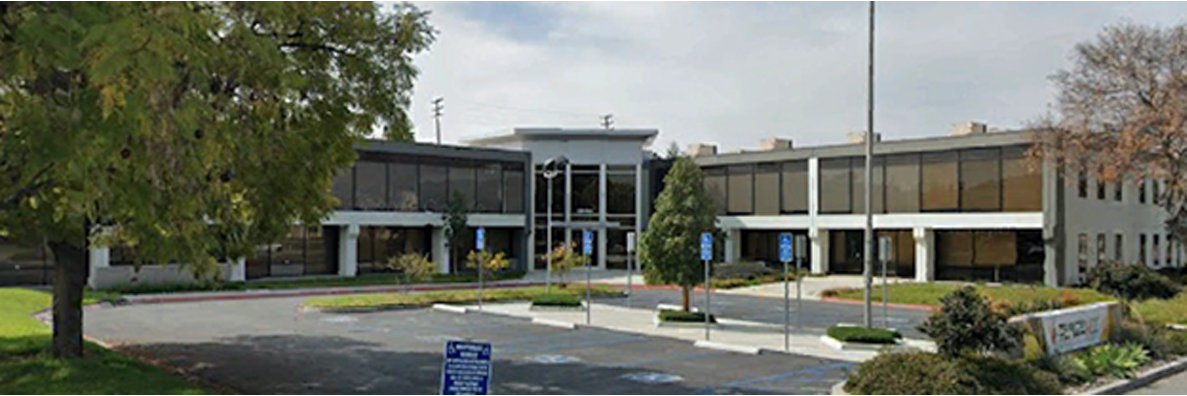
Los Angeles-based real estate developer Sonnenblick Development LLC has acquired The Monterey Park Government Center, an 86,000 square foot, 2-story office building, located just east of Downtown Los Angeles, on the I-60 Freeway in a $37.5 Million deal.
80% of the previously-vacant building was then simultaneously pre-leased to The Social Services Department of the County of Los Angeles for occupancy by three of its divisions: GAIN, IHSS (In Home Supportive Services), & MIE (Mgmt, Info & Evaluation). Renovation of the building will take approximately 9 months, and the space will be ready for occupancy by the 2nd quarter of 2022. The general contractor will be KPRS Construction, and the building architect is Langdon Wilson & Associates. The property sits on 4 acres and is located at 588 Atlas Avenue in Monterey Park.
Sonnenblick Development is one of Los Angeles’ largest developers of government-tenanted office buildings, with almost one million square feet of government space, housing tenants such as The Department of Homeland Security, The Los Angeles County Sheriff’s Department, The FBI, The Dept. of Public Health, and The Social Security Administration, etc.
For more information, please go to: www.SonnDev.com
Bob Sonnenblick to moderate IMN Keynote panel: 2nd Annual Distressed Hotels Virtual Forum February 18, 2021

PRESS RELEASE: Monday February 15, 2021 Ny City, NY
IMN Conferences, Inc has announced that Los Angeles-based real estate developer, Robert Sonnenblick, Chairman of Sonnenblick Resorts LLC, has been chosen to moderate their keynote panel at the upcoming 2nd annual Distressed Hotels Virtual Forum & Webinar on February 18th.
Mr. Sonnenblick’s panel is entitled “Domestic & Global Opportunities in Distressed Hotel Investments”, and it will feature fund-investors and money sources from around the world who finance and acquire distressed hotel deals. The panel will discuss the current and future state of the lodging industry, and the money that funds new hotel transactions.
For more info, please see: www.lMN.org

Domestic and Global Opportunities in Distressed Hotel Investment
- Globally, which markets are proving most resilient throughout the pandemic?
- Where are luxury hotel investments on the rise? Which investor groups are driving activity?
- How are institutional investors viewing offshore vs. domestic distressed hotel investment opportunities?
- How are global tourism rates trending, and how will this impact investment and development pipelines?
- How do you finance acquistions?
- Partnering with foreclosure banks and funds
- How long is the domestic hotel industry down turn?
- What hotel segments recover first? (Urban, Itd services, resorts)?
- Which markets are leading in new construction activity?
- What are the unique complexities and risks of cross-border distressed hotel transactions?
For more info, please see: www.IMN.org
Bob Sonnenblick – Chairman of Sonnenblick Development chosen by IMN Conferences Inc. to moderate the “Mezzanine Loan & Gap Financing for Real Estate Deals”
PRESS RELEASE: N.Y. Monday Nov 16th, 2020
Los Angeles-based real estate developer and investor, Bob Sonnenblick, the Chairman of Sonnenblick Development LLC., has been chosen by IMN Conferences Inc. to moderate the “Mezzanine Loan & Gap Financing for Real Estate Deals” panel at the upcoming IMN Real Estate Mezz & Distressed Debt Conference on Wednesday November 18th.
Mr. Sonnenblick’s panel will feature interviews and questions with five major national real estate lenders, who are still active today funding projects amidst the “mid-Covid” financial turmoil in the real estate markets.
The webinar/”virtual conference” may be heard live at www.imn.org. or for more info, please call (212)-901-0506


Mezzanine Loan Origination Trends in an Uncertain Market Environment & Outlook for Gap Financing
- Which markets and sectors are most attractive/in need of mezzanine financing at the moment?
- How have terms and negotiations changed in the past 6 months?
- Is the market still saturated with too many debt funds originating mezzanine loans? How has the global health crisis impacted competition?
- Are we seeing banks starting to move back into the space?
- What are the outlooks for foreign investment and joint venture financing?
- What financing is available and favorable for distressed deals across different asset classes?
- How do terms compare to ground-up development deals?

Bob Sonnenblick Panelist at iGlobal Virtual Forum May 19th
ABOUT THE VIRTUAL EVENT
iGlobal Forum : The Future of CRE Lending Amidst COVID-19 virtual event, May 19th 2020, at 11am (EST).
KEY TOPICS
-
How does the number of lenders in the market differ today from when you did your loan then? Are interest rates higher now as a result of the Pandemic/virus?
-
Has underwriting (by lenders) changed over the last 2-3 months?
-
Are lenders being more conservative now because of uncertainty in the market-place?
-
How will lenders size loans and predict cashflow over the next several years given the unknown trajectory of COVID-19
-
Which property types are likely to hold in best and which are likely to experience limited capital availability